Tuesday, 17 January 2012

Langdale Mountaineering

The forecast for the weekend was good, with the UK finally getting a little high pressure and temperatures dropping and skies clearing. Unfortunately due to a prior engagement on the Saturday I was unable to make it to Scotland for the weekend which was a shame as it seemed like the place to be. Instead, Sunday morning Ash, Bec and myself headed up to Langdale.


Raven Crag and a frosty Langdale in the morning.


We left the Old Dungeon Ghyll car park and headed straight up to the base of Raven Crag where roped up and set up off up Middlefell Buttress D. It was bright and sunny however the rock was cold (but not too cold) and there was a chill breeze. We moved together with Ash leading, Bec following and myself at the back. Once we reached the final steep wall we swapped round and I took over the lead. We then moved across to follow a continuation on the buttress just to the right the top of Middlefell for another 100m or so until we reached easy ground.


Getting lured in by Gimmer Crag.


Our original plan for the day had been to do the scramble on Thorn Crag before heading over to do another scramble on the face of Pike of Stickle. As we approached Thorn Crag though we couldn't take our eyes off Gimmer which looked awesome in the morning sunshine so decided, despite only having one rope and a very minimal scrambling rack to go and have a go at Gimmer Chimney.


Myself leading up Gimmer Chimney.


We managed to do Gimmer Chimney VD+ in two long pitches and little bit of alpine trickery. I led the first long pitch to the base of the chimney which I thought felt a little stiff however this probably had something to do with the fact it was extremely cold, I was in boots and that the rock was verglassed in places. I'm quite glad to have ticked it off as I'd never climbed it before, and I do always enjoy climbing on Gimmer, its a fantastic crag.


Walking off Gimmer Crag, Langdale valley below and Windemere in the distance.


We descended back down to the car and then proceeded to spend the rest of the afternoon drinking, eating and gear perusing in Ambleside.

Monday, 26 December 2011

Drytooling - White Goods

With a serious lack of winter going on in the UK at the moment, myself and Martin decided to try and cure our cravings of swinging tools by heading down to White Goods just outside of Ruthin for some drytooling. We used the excellent topo that can be found on Ramon's website here, although I believe that it's also covered to a degree in the 1988 Welsh Winter Climbs guidebook by Cicerone. The forecast was poor and it rained all the way from Tarleton to the crag but we knew that despite the possibility of us not actually managing to send many lines we'd be able to suss out the place for a future visit. The description in Ramon's guide is excellent and we found the different sectors without problem.


Martin on Adams.


I've only ever climbed drytooling M-grade climbs once before when I was climbing in Canada, and Martin's only got Scottish winter experience so only having a rough idea of what they equate to or what we were capable of we were quite conservative with our route choice and decided to start on Adams M5 which after a a fairly steep pull off the ground to a ledge follows a crack to a lower off at the top. I led the pitch and really enjoyed it, despite the terrible weather. There was a mixture of hooking and torquing up the crack and some of it required some careful foot work. It felt good to be on some steep technical mixed ground again. Martin then followed me up but by the time he was back down we were both, despite our three figure Gore-Tex jackets soaked to the skin in the torrential rain so we decided to bail.


Martin loving the hooks.


On the way home we had browse in the Snow & Rock on the Wirral before a nice long session at Awesome Walls Liverpool, continuing the theme of the day by using there new drytooling wall as well as some standard climbing. It was quite a way to drive for one route, but it was a lot of fun and had it not of been for the weather I think we would of quite a bit more done. We'll definitely be back, with a better forecast and I'd be keen to have a crack at some of the harder lines.

Monday, 19 December 2011

Trinity Face Solo

Sunday morning I headed back up to Pen Y Pass and then in on Pyg Track up towards Snowdon. A lot of wet  snow was falling as I left the car park and by the time I got a to the notch below Crib Goch there a few inches of fresh snow lying on the ground. Once I passed the notch there was a noticeable increase in the amount of snow with drifts being several feet deep in places. The wind was not quite as strong as the previous day but the visibility was reduced.


Good ice forming on sections of the face.


Eventually I reached the ruins in the cwm above the Glaslyn where I took a minute to eat, drink, gear up and build a small snowman. I then headed up towards the face on the approach slopes. The snow, while still powdery in places seemed to have consolidated from the previous day to some extent and there was less evidence of the windslab we'd seen the day before also.


The iced slabs on skier's right of the gully.


Overnight a lot more ice had developed which was promising as well as some patches of snow which had turned to neve. I headed up towards Central Trinity II again, passing the chockstone where we had reached the previous day. Above the chockstone the gully narrowed, from photos I've seen this banks out usually, but being early in the season it hasn't yet and consisted of a neve runnel bounded by the rock wall on the right and the iced slabs on the left. This made for some excellent fun climbing, if a little out there for grade II.


Nearing the top of the gully and exit slopes.


The vast majority of the turf was well frozen, which was particularly evident once I topped out of the gully and climbed the exit slopes to the summit ridge. The cornices are present in places but from the ones that I observed are small and shouldn't pose an issue.


The route marked in red.


Once I topped out I visited the summit and then headed down. I was contemplating descending Crib Goch but due to the high winds on the top I decided to save it for another day. I managed to do the route car park to car park in just over 4 hours which I was quite happy with considering I wouldn't say that I'm that fit at the moment.

Sunday, 18 December 2011

Snowdonia Winter Mountaineering

This weekend I've been in North Wales staying in Nant Peris just at the bottom of the Llanberis pass. With the snowfall across many parts of northern England on Friday morning we decided to pack our winter gear in case anything was in condition.


Lewis on the walk in.


We hitched up to Pen Y Pass on Saturday morning, kindly picked up by some member of RAF Leeming who were heading round to Ogwen. We walked in on the Pyg Track to Clogwyn y Garnedd to have a look at the Trinity Face. The visibility was low, by the time we got to the Glaslyn it was dropping from around 100m to less than 25m. We headed over and geared up not far from the ruins at the top of the Glasyn headwall. We then made our way up to the Spider snowfield at the base of the Trinity routes. While the turf where exposed was well frozen, the rock was well rimed and there was ice forming there was still quite a depth of unconsolidated powder, which is a lot of places has a substantial layer of windslab sitting on top of it.


Myself climbing a variation to the left of Left Hand Trinity.


The weather was bad with strong winds blowing snow around and causing continuous spindrift avalanches to flow down the gulleys. We started up Central Trinity II 2 and after a short distance reached the large chockstone which is not yet banked out so we passed it on the left via an ice smear. Shortly after this the weather intensified and the spindrift avalanches got bigger, this coupled with the fact that the wind loading the exit slopes above was worrying me a little so we decided it was prudent to bail. A short abseil overt the chockstone and we were able to downclimb/walk down the rest of the route back down into the Cwm.


We traversed round the Cwn before picking a interesting but easy and safe line to top out onto the ridge on, I manged to spot a few interesting mixed lines to play on as well to keep things interesting. The wind was pretty strong on top so we got our heads down and headed down the tourist path to Llanberis.

Wednesday, 14 December 2011

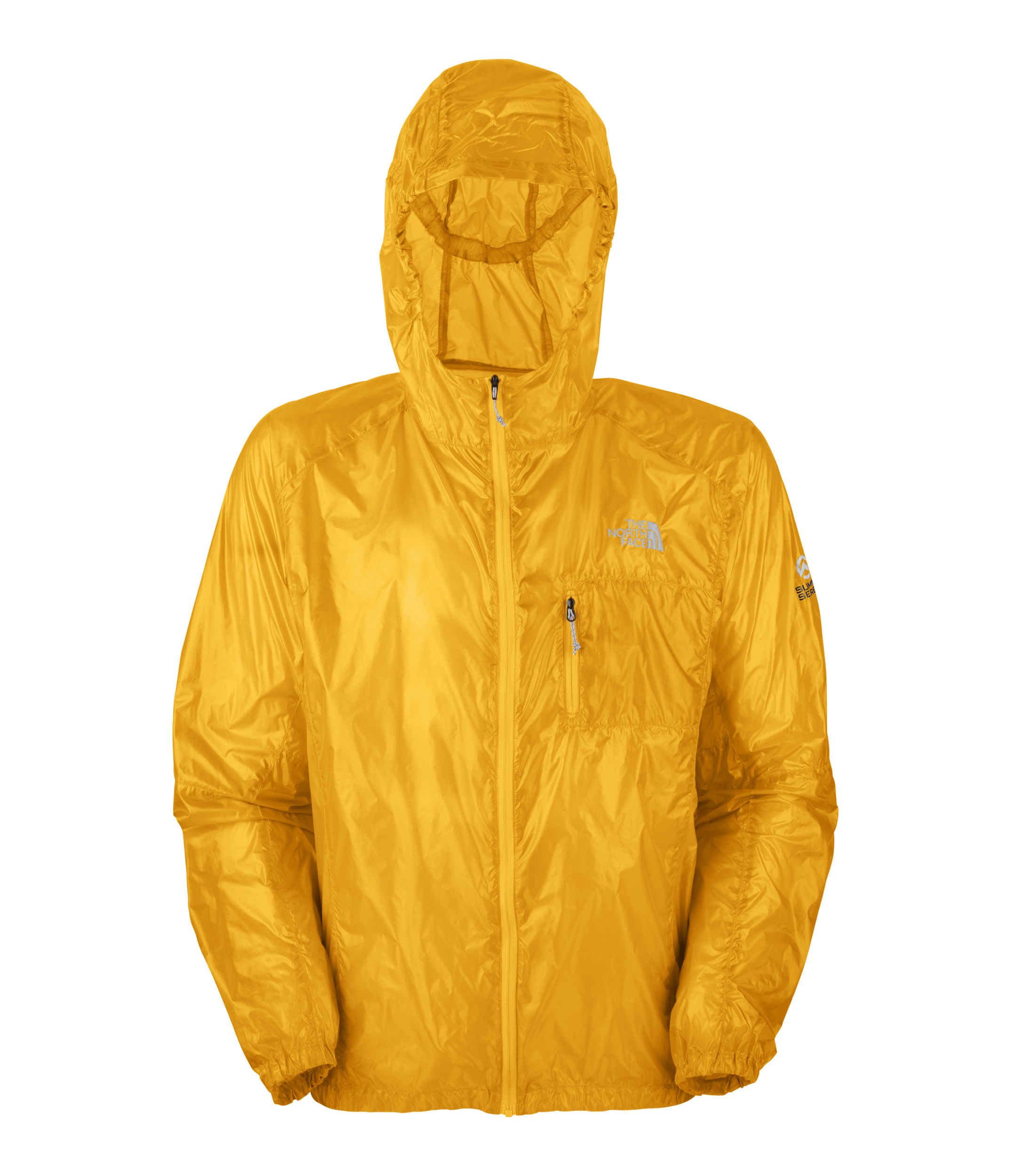
The North Face Verto Jacket - Review

I've been using the Verto windshirt for the last few months after picking it up during the summer. Here's North Face's blurb on the item:


'The North Face Verto jacket for men is specifically designed for climbing expeditions there space is a precious commodity. The Verto is wind and water resistant and compactable down to the size of an energy bar. '


I've been after a hooded windproof for quite some time now. Something to pack up small and clip to my harness for long multi-pitch routes or to use as a lightweight shell when moving fast in the mountains in poor weather, when a full shell jacket or a softshell would probably be too warm. From the start I'd had my mind set on the Patagonia Houdini jacket having read good reviews from the likes of Steve House and Colin Haley. I managed to get a very good deal on my Verto though so couldn't really refuse it at the time. Incidently I've gotten a Houdini in the last few weeks so hopefully after a few more days on the hill I'll be able to offer some good comparisons between the two jackets, anyhow, back to the Verto for now...


Sea cliff climbing at Gogarth keeping the spray and wind off with the Verto.

The first thing that strikes you about this jacket is how light it is, perhaps even stupidly light. My medium weighs in at 93g and packs down to less than the size of a small apple, stuffing into is own small chest pocket. The fabric is very thin and almost transparent, it's Pertex Quantum 7D, 100% Nylon micro ripstop, which comes in at 24g per square meter making it one of their lightest fabrics. It's windproof and fairly water resistant thanks to its DWR coating. The weight is kept down further as they have not used any drawcords in the hem or hood, instead they just use simple elastic closures. While on the hood I think these work well, fitting reasonably well over a normal head but also just pulling it off when worn over a helmet. For me personally the elastic isn't a tight enough fit round the cuffs or the waist. I wouldn't want to use it in winter as I think it would just get filled with snow. Another gripe is that while the fabric is lovely and soft and shiny, unfortunately this means that it quite readily slides out from under a harness which I found quite annoying.


Walking off Raven Crag in Langdale with the Verto
layered over a micro fleece on a cold day.

So the good points about this jacket. Firstly despite appearances it is rather hard-wearing. Its been out on quite a few routes with me now and has only got one or two small patches of abrasion on it which I'm happy with, and no holes at all. Because the fabric is so thin I quite often snag it in the zip but this hasn't damaged the fabric either. It is as stated windproof and it does shrug off a shower which is what its designed to do. I sat in the rain at the top of Carreg Wastad in the pass for 20 miuntes waiting for Stubbs to fight his way up a very wet Ribstone Crack and stayed dry underneath it.


It is an expensive jacket though, at £110 pounds, thats more than £1 a gram! That does seem to be the kind of money people are paying for a high end hooded windproof these days as the obvious competitors of the Houdini or Arc'teryx's Squamish hoody all all around that mark. Montane's lite speed is a slightly more cheaper option that is out there. If you want another opinon its also been reviewed recently in Climber.

Monday, 12 December 2011

Blade Runner - Helvellyn

Martin Freeman, Carl Stubbs and myself headed up to Red Tarn Cove on Helvellyn on Saturday morning with high hopes of getting our first route of the winter season in after a promising report for Steve Ashworth at the Epicentre on the Friday evening.


Blade Runner take the line up the centre of the buttress, bounded by No.2 gully to the left and No.1 gully to the right.


We opted for the northern approach on the road, heading up to Penrith first which proved to be a wise move as Kirkstone Pass was closed. We were at the YHA car park at Glenridding for soon after first light. Temperatures were around freezing and snow was down to a low level which was promising, unfortunately due to being the first party there (which we were surprised at) we had to break trail all the way into the cove, which at times was drifts of 30cm deep unconsolidated powder, as such the walk in took us considerably longer than the standard 45 minutes.


Myself leading on Blade Runner.


As there was quite a bit of unconsolidated snow around and we were unsure on how frozen turf would be we opted for Blade Runner IV which is a mixed line following a rocky rib which divides no.2 and no.1 gully. It is also one of the remaining routes of the face that I have left to climb. The climb was good, following a series of grooves and ledge systems and a bit of ridge and arete climbing on the second pitch. In places where it was exposed the turf was well frozen however where it has been covered by snow and insulated it is still not solid, it needs a hard freeze to bring it properly into condition. There was a bit of ice forming here and there, and across the gully V-Corner looked to have it's share as well.


Stubbs coming up to the second belay.


I spoke to a party who did No.1 Gully and they said that while a large proportion of it was unconsolidated the crux step and several other areas did have neve on them. It was worth noting that we observed a lot of avalanche debris below the above area which looked to have originated in no.2 gully, from its age I guess this slid sometime on Friday or that night. The scarp slopes below the summit above the main buttresses were in places fairly heavily loaded with a 10-15cm layer on windslab readily detaching on the top. There are cornices in place across the top however they are small and easily passable. We un-roped at the top of the Blade Runner Buttress and soloed to the top.


Martin heading towards the cornice.


After topping out we summited Helvellyn, took a few minutes in the shelter before descending Striding Edge taking a  sueprdirect line which was good fun.

Monday, 5 December 2011

Pinnacle Ridge & Helvellyn

This weekend I was in the Lakes helping to run a training course for some members of WLSMG who are heading to the Canadian Rockies in the summer. Saturday I took a mixed ability group up the ever classic Pinnacle Ridge on St. Sunday crag and then continued on a circuit round, dropping down to Grisedale Tarn and then up over Dollywagon, Nethermost Pike and finally Helvellyn. We had intended to descend Striding edge but decided to the winds and icing on the ridge that it would safer to head north and instead drop off the main ridgeline into Glenridding. I've put together a small video of the day below:


It was pretty cold out during the day and we consistently experienced hail and snow showers so winter is certainly on its way. The turf on the summit of Helvellyn was looking frozen although nothing on the Red Tarn face was anywhere near in condition yet but it looks like hat might have changed over the last 24 hours as Paddy Cave has been out on Bowfell Buttress today.

Wednesday, 30 November 2011

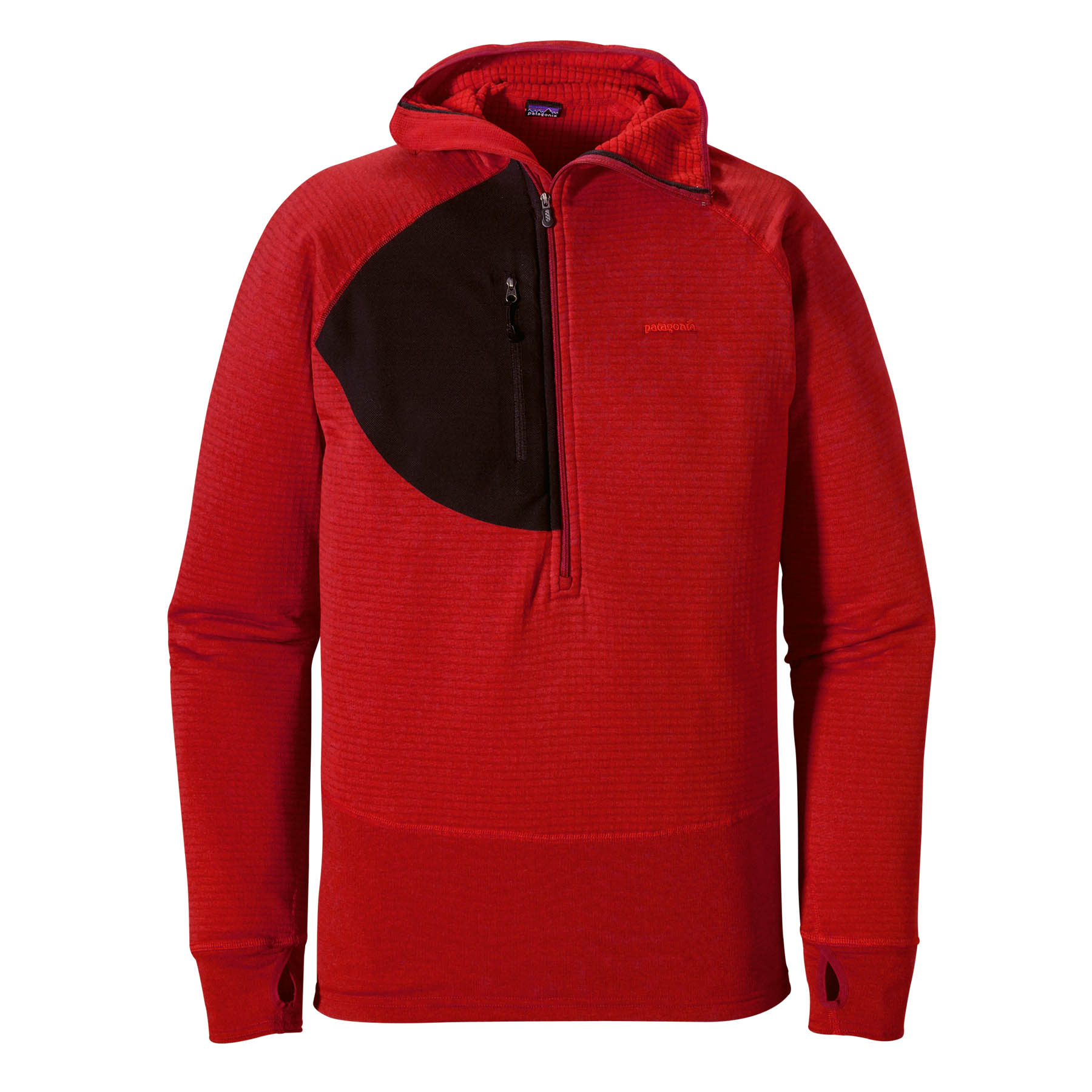
Patagonia R1 Hoody - Review


The R1 Hoody is perhaps one of my favourite pieces of outdoor clothing so after 18 months of use I’m going to offer my thoughts on it here. This is Patagonia’s run down of the product:

The minimalist R1® Hoody follows our guiding design principle: Perfection is achieved when there's nothing left to take away. Alpinists and backcountry skiers live in this finely tuned, versatile favorite that's made of Polartec® Power Dry® polyester with a high/low grid interior. The fabric provides enhanced breathability, superb compressibility and stretch, has a terrific feel, and remains durable and warm. Its design features the pared-down detailing that avid climbers and backcountry skiers need - from the deep-venting front zipper that's offset at the face, to wrist-warming thumb loops, to the snug-fitting balaclava-style hood. With raglan sleeves for pack-wearing comfort, an exterior chest pocket and low-grid stretch polyester at the cuffs and bottom hem for minimal bulk under a harness.

The first regulator garment that I bought was a R1 Flashpullover back in 2006, it’s a sort of cross between the R1 hoody and the pullover in the current line. It has the more sculpted and longer fit of the hoody and the lighter stretch fleece in the cuffs, round the lower torso and under the arms but lacks the thumb loops and hood. I don’t know the exact number but I wouldn’t be surprised if this top had seen more than 150 days use. It’s been used as a midlayer while skiing, a stretchy cragging top on cooler days, a super warm baselayer in really cold conditions and now my girlfriend occasional dons it as pyjames on cold nights! I’m a little disappointed that Patagonia has dropped this from their current line as I feel it’s a significant step up from the regular pullover because of the longer cut, and small features like the offset neck and zoned use of fabrics. I’m guessing their logic behind this is that the regular pullover, without those aforementioned features are cheaper to make and anybody who does desire them will buy the hoody and probably benefit from the hood and longer cut as well. In a perfect world I guess we’d have all three, but Patagonia can’t have an infinite range.

Cragging in Sqamish,BC in my Flash pullover.

After using and abusing the Flash for so long I decided that it was time to replace it with a hoody, and eventually about 18 months ago I managed to find the elusive item in Patagonia’s outlet shop in Salt Lake City, Utah. It soon became clear that this was indeed going to be an upgrade rather than a replacement for my old Flash pullover.

Let’s talk about the material first. It uses a high/low grid interior made of Polertec’s Power Dry supplemented my Capilene stretch panels on the waist to minimalize bulk under a harness and around the cuffs and thumb loops to have the same effect under gloves. Because of the grid design it is noticeably more breathable then other standard fleeces, it also means that it’s is comfortable to wear next to the skin in in moister conditions.

Sport climbing on a cool day in the Saas valley in Switzerland with the R1 Hoody.

The hood, there weren’t up until a few years ago a lot of hooded fleeces out on the market and Patagonia were ahead of their time with the original release of the R1 Hoody and when they brought it back I feel they were still ahead of the game as its only in the last few years that we’ve seen other companies start to copy the design with couple of examples being the Berghaus Smoulder Hoody and Rab’s Shadow Hoody. I also hear Mountain Hardwear has a similar piece in the pipeline which has been designed in conjunction with Ueli Steck. While the hood isn’t a replacement balaclava as it doesn’t cover the face entirely it gets pretty close to it. My routine at the bottom of a winter route is pull the hood up under my helmet as it keeps my head nice and warm and stops spindrift going down my back. The offset zipper means is comfortable to wear all the time as you have no zipper rubbing against your chin. The zipper itself its nice and deep, deeper than most pullover tops which allows for excellent venting and dumping of heat if it gets too hot.

Winter climbing on Aonach Mor with the Hoody as a midlayer.

This is a climbing garment so it is perhaps prudent to mention that the combination of the stretch properties of the fabric and superb cut mean that his garment doesn’t restrict movement at all. Mine is a snug size small and I still don’t feel restricted all, even when using it as a midlayer. It’s also comfortable to wear having flat lock seams which are cleverly positioned away from areas where they might rub or chafe. Predominantly this is a winter climbing top for me, check out my article here to see what I wear in conjunction with.

The workmanship, being Patagonia is second to none. This top has probably seen 50 days of use, having climbed 35 routes in the UK last winter, and seen two summers in the Alps and has little wear to show for it apart from a little balling of the fabric, and to be honest I expected this. My Flash pullover which is now 6-7 years old and has been my go to cragging to top for the last few is still wearable now despite the fabric being quite heavily balled and two small holes appearing in the chest – I’ve certainly had my money’s worth though.

Belaying on Tower Ridge, Ben Nevis with the hood up under a helmet.

Yes, £120 is a lot for a fleece. But you not just getting a fleece, your getting a super versatile piece of clothing that will probably last you for quite a long time. If you don’t have one, and you do any winter or alpine climbing I cans seriously recommend them and guarantee that you won’t be disappointed.

Saturday, 26 November 2011

Gimmer Crag

The day after our evening at the Kendal Film Festival we decided yo head out in the Lakes to try and get a final bit mountain route in before everything takes on its winter guise. We arrived in the Old Dungeon Ghyll and sorted gear, I was climbing with Bec and Joe and Andy were climbing together. It was cold but reasonably dry so we decided to head up to Gimmer.


Sorting gear in the ODG car park.


Bec and myself did Asterisk VS 4b which I led. Its a superb long pitch climbing the full height of the lower North West face on steep, just off vertical terrain but where good holds, or good gear is never that far away. In character its very similar to its neighbouring route North West Arete if a little easier perhaps. I topped out on Ash Tree ledge and brought Bec up and we had a bite to eat and warmed our hands before she set off up the first pitch 'D' Route S+ ***.


Andy on Ash Tree Ledge.


I'd wanted to do either F Route or Kipling Groove however both were green and damp so I guess it will be summer before I come back to get them. I've done D Route before but once again it didn't fail to dissapoint, being high on the face of Gimmer and steep for the grade. Bec belayed at the block belay, after having a little moment on the crux and then I came up and led on through to the top.

Bec leading high on Gimmer in the evening sun.

We abseiled on the chain at the top back down to Ash Tree Ledge, and then off the ledge back down the North West Face to our sacks, starting the walk out just as we were loosing the light. A few pints in the ODG and we headed back to Lancaster. Joe and Andy did Ash Tree Slabs VD and seemed to have a good time on that.

Friday, 18 November 2011

The Moonflower

Friday evening, Bec and myself along with a few other friends from Lancaster took the train up to Kendal to catch the premier of The Moonflower new film from Posing ProductionsJon Bracey and Matt Helliker were there, along with Alastair Lee who introduced the film. It chronicles there ascent of a new route on the North Buttress of Mt. Hunter in the Alaska Range. which they named the Cartwright Connection in honour of Jules Cartwright, a British Mountain Guide who tragically died while guiding the Piz Badile a few years ago.You can see the trailer below:


Cartwright originally envisaged the line as a companion to his route The Knowledge ED4 on the same buttress, which he climbed with Ian Parnell in 2000, although feeling that the climbing on this new line may be of a more sustained nature. In may of this year Jon Bracey and Matt Helliker set out to complete this line, which they did.
The Cartwright Connection, Alaskan
 Grade 6: 5.8 A2 AI6 M6, 2000m


I won't ruin much of the story now as I think its best saved for when you watch the film, which I think it great. The lack of footage of a lot of the actual climbing, and the quality of the camera work done by the climbers could be criticised but I think this gives a real raw look at what climbing a bit alpine route it like. I think Alastair Lee might of been a little short on footage to work with as I'm pretty sure I saw some of winter climbing on the Ben at one point that he'd subtly woven in! On the other hand, some of the aerial footage and time-lapse photography that accompany that taken by the climbers is very impressive.


Bracey and Helliker climbed the route in a clean but slow style, carrying a portaledge and plenty of food. It will be interesting to see however in the coming future if this route has the potential to be climbed fast and light in a single push style as some of the route on Hunter, and many of the other big mixed test pieces in the Alaska range already have.


So, an excellent achievement for the alpinisits and a great film. I highly recccomend buying the DVD or downloading it from posing productions here. It's certainly solidified by ambition for a trip to Alaska.