Showing posts with label Review. Show all posts

Wednesday, 14 December 2011

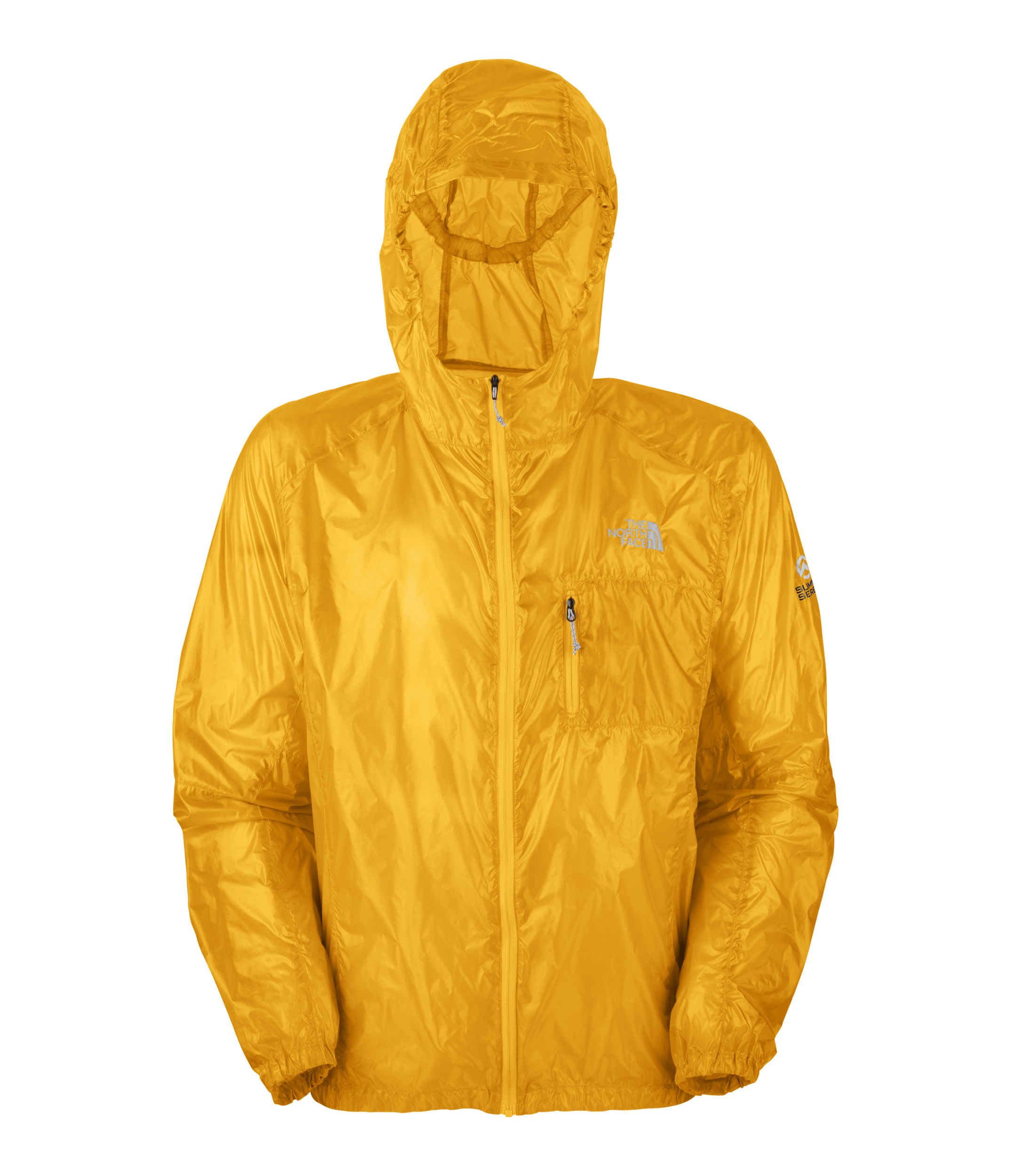
The North Face Verto Jacket - Review

I've been using the Verto windshirt for the last few months after picking it up during the summer. Here's North Face's blurb on the item:


'The North Face Verto jacket for men is specifically designed for climbing expeditions there space is a precious commodity. The Verto is wind and water resistant and compactable down to the size of an energy bar. '


I've been after a hooded windproof for quite some time now. Something to pack up small and clip to my harness for long multi-pitch routes or to use as a lightweight shell when moving fast in the mountains in poor weather, when a full shell jacket or a softshell would probably be too warm. From the start I'd had my mind set on the Patagonia Houdini jacket having read good reviews from the likes of Steve House and Colin Haley. I managed to get a very good deal on my Verto though so couldn't really refuse it at the time. Incidently I've gotten a Houdini in the last few weeks so hopefully after a few more days on the hill I'll be able to offer some good comparisons between the two jackets, anyhow, back to the Verto for now...


Sea cliff climbing at Gogarth keeping the spray and wind off with the Verto.

The first thing that strikes you about this jacket is how light it is, perhaps even stupidly light. My medium weighs in at 93g and packs down to less than the size of a small apple, stuffing into is own small chest pocket. The fabric is very thin and almost transparent, it's Pertex Quantum 7D, 100% Nylon micro ripstop, which comes in at 24g per square meter making it one of their lightest fabrics. It's windproof and fairly water resistant thanks to its DWR coating. The weight is kept down further as they have not used any drawcords in the hem or hood, instead they just use simple elastic closures. While on the hood I think these work well, fitting reasonably well over a normal head but also just pulling it off when worn over a helmet. For me personally the elastic isn't a tight enough fit round the cuffs or the waist. I wouldn't want to use it in winter as I think it would just get filled with snow. Another gripe is that while the fabric is lovely and soft and shiny, unfortunately this means that it quite readily slides out from under a harness which I found quite annoying.


Walking off Raven Crag in Langdale with the Verto
layered over a micro fleece on a cold day.

So the good points about this jacket. Firstly despite appearances it is rather hard-wearing. Its been out on quite a few routes with me now and has only got one or two small patches of abrasion on it which I'm happy with, and no holes at all. Because the fabric is so thin I quite often snag it in the zip but this hasn't damaged the fabric either. It is as stated windproof and it does shrug off a shower which is what its designed to do. I sat in the rain at the top of Carreg Wastad in the pass for 20 miuntes waiting for Stubbs to fight his way up a very wet Ribstone Crack and stayed dry underneath it.


It is an expensive jacket though, at £110 pounds, thats more than £1 a gram! That does seem to be the kind of money people are paying for a high end hooded windproof these days as the obvious competitors of the Houdini or Arc'teryx's Squamish hoody all all around that mark. Montane's lite speed is a slightly more cheaper option that is out there. If you want another opinon its also been reviewed recently in Climber.

Wednesday, 30 November 2011

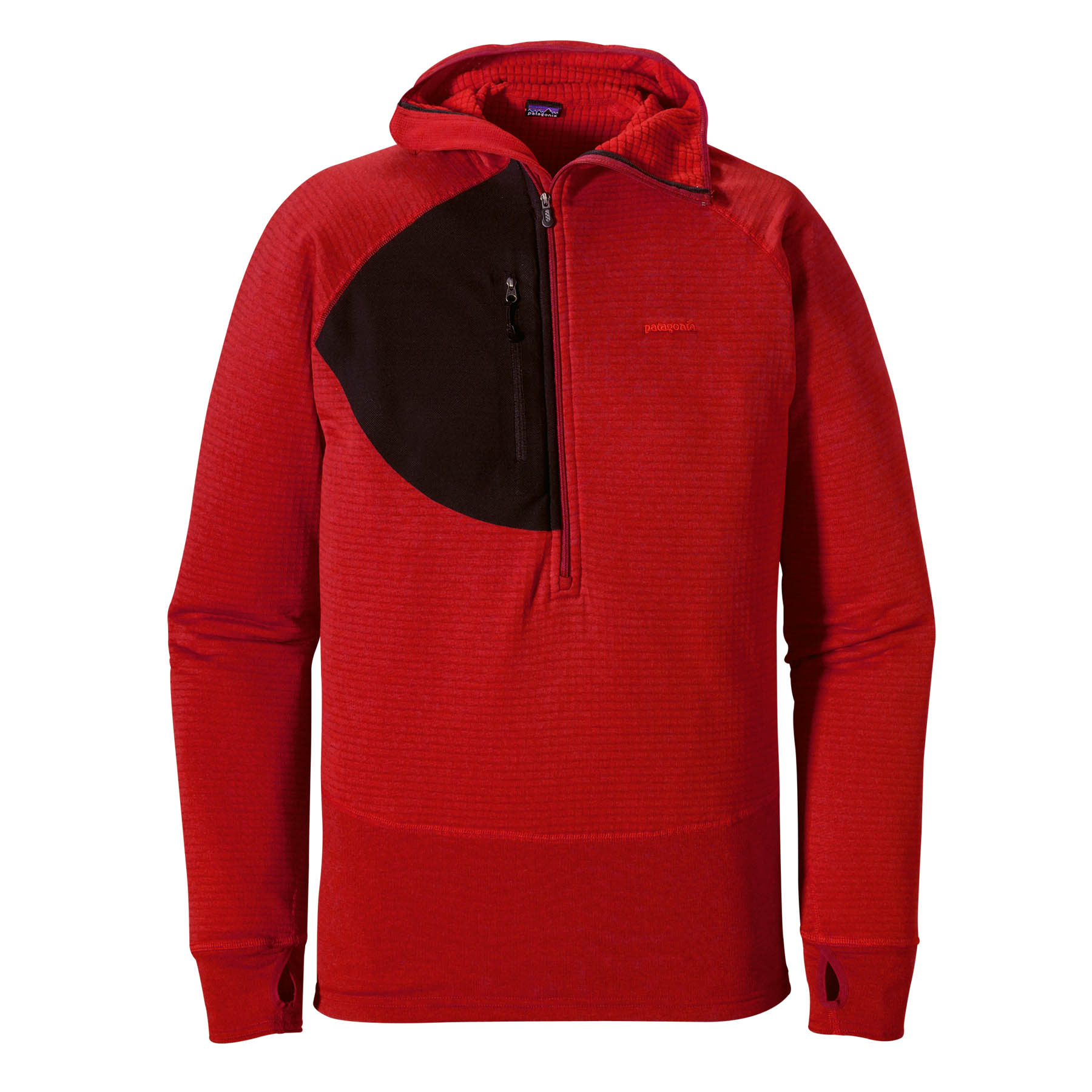
Patagonia R1 Hoody - Review


The R1 Hoody is perhaps one of my favourite pieces of outdoor clothing so after 18 months of use I’m going to offer my thoughts on it here. This is Patagonia’s run down of the product:

The minimalist R1® Hoody follows our guiding design principle: Perfection is achieved when there's nothing left to take away. Alpinists and backcountry skiers live in this finely tuned, versatile favorite that's made of Polartec® Power Dry® polyester with a high/low grid interior. The fabric provides enhanced breathability, superb compressibility and stretch, has a terrific feel, and remains durable and warm. Its design features the pared-down detailing that avid climbers and backcountry skiers need - from the deep-venting front zipper that's offset at the face, to wrist-warming thumb loops, to the snug-fitting balaclava-style hood. With raglan sleeves for pack-wearing comfort, an exterior chest pocket and low-grid stretch polyester at the cuffs and bottom hem for minimal bulk under a harness.

The first regulator garment that I bought was a R1 Flashpullover back in 2006, it’s a sort of cross between the R1 hoody and the pullover in the current line. It has the more sculpted and longer fit of the hoody and the lighter stretch fleece in the cuffs, round the lower torso and under the arms but lacks the thumb loops and hood. I don’t know the exact number but I wouldn’t be surprised if this top had seen more than 150 days use. It’s been used as a midlayer while skiing, a stretchy cragging top on cooler days, a super warm baselayer in really cold conditions and now my girlfriend occasional dons it as pyjames on cold nights! I’m a little disappointed that Patagonia has dropped this from their current line as I feel it’s a significant step up from the regular pullover because of the longer cut, and small features like the offset neck and zoned use of fabrics. I’m guessing their logic behind this is that the regular pullover, without those aforementioned features are cheaper to make and anybody who does desire them will buy the hoody and probably benefit from the hood and longer cut as well. In a perfect world I guess we’d have all three, but Patagonia can’t have an infinite range.

Cragging in Sqamish,BC in my Flash pullover.

After using and abusing the Flash for so long I decided that it was time to replace it with a hoody, and eventually about 18 months ago I managed to find the elusive item in Patagonia’s outlet shop in Salt Lake City, Utah. It soon became clear that this was indeed going to be an upgrade rather than a replacement for my old Flash pullover.

Let’s talk about the material first. It uses a high/low grid interior made of Polertec’s Power Dry supplemented my Capilene stretch panels on the waist to minimalize bulk under a harness and around the cuffs and thumb loops to have the same effect under gloves. Because of the grid design it is noticeably more breathable then other standard fleeces, it also means that it’s is comfortable to wear next to the skin in in moister conditions.

Sport climbing on a cool day in the Saas valley in Switzerland with the R1 Hoody.

The hood, there weren’t up until a few years ago a lot of hooded fleeces out on the market and Patagonia were ahead of their time with the original release of the R1 Hoody and when they brought it back I feel they were still ahead of the game as its only in the last few years that we’ve seen other companies start to copy the design with couple of examples being the Berghaus Smoulder Hoody and Rab’s Shadow Hoody. I also hear Mountain Hardwear has a similar piece in the pipeline which has been designed in conjunction with Ueli Steck. While the hood isn’t a replacement balaclava as it doesn’t cover the face entirely it gets pretty close to it. My routine at the bottom of a winter route is pull the hood up under my helmet as it keeps my head nice and warm and stops spindrift going down my back. The offset zipper means is comfortable to wear all the time as you have no zipper rubbing against your chin. The zipper itself its nice and deep, deeper than most pullover tops which allows for excellent venting and dumping of heat if it gets too hot.

Winter climbing on Aonach Mor with the Hoody as a midlayer.

This is a climbing garment so it is perhaps prudent to mention that the combination of the stretch properties of the fabric and superb cut mean that his garment doesn’t restrict movement at all. Mine is a snug size small and I still don’t feel restricted all, even when using it as a midlayer. It’s also comfortable to wear having flat lock seams which are cleverly positioned away from areas where they might rub or chafe. Predominantly this is a winter climbing top for me, check out my article here to see what I wear in conjunction with.

The workmanship, being Patagonia is second to none. This top has probably seen 50 days of use, having climbed 35 routes in the UK last winter, and seen two summers in the Alps and has little wear to show for it apart from a little balling of the fabric, and to be honest I expected this. My Flash pullover which is now 6-7 years old and has been my go to cragging to top for the last few is still wearable now despite the fabric being quite heavily balled and two small holes appearing in the chest – I’ve certainly had my money’s worth though.

Belaying on Tower Ridge, Ben Nevis with the hood up under a helmet.

Yes, £120 is a lot for a fleece. But you not just getting a fleece, your getting a super versatile piece of clothing that will probably last you for quite a long time. If you don’t have one, and you do any winter or alpine climbing I cans seriously recommend them and guarantee that you won’t be disappointed.

Thursday, 5 May 2011

La Sportiva Trango S Evo - Review


The La Sportiva Trango has been my staple go-to summer boot for over half a decade. I first purchased a pair of the original Trangos in 2005 and loved them immediately, unfortunately I soon grew out of them and sold them and soon after in 2006 purchased a new pair of the Trango S Evos. Here’s Sportiva’s blurb on the boot: 


'Evolution of the famous model Trango S, it features the Gore-Tex® membrane, that guarantees waterproofness and breathability. A modern multi-purpose lightweight boot: vie ferrate, mountaineering, alpine hiking. Lightweight is its main characteristic, reached thanks to the usage of innovative and performing materials. Absolute comfort, waterproofness and appealing look make it a multi-purpose product. Lacing system derived from climbing shoe technology, with the addition of a lace lock that allows double tension. Innovative multidirectional ankle hinge “3D Flex System”. Double rubber reinforcement on the toe box. Rubber rand with differentiated height on the areas of higher abrasion.'

What you first notice about these boots is just how light they are, at 1250g they are some of the lightest B1 boots on the market. They have a back ledge for crampons but no toe welt, and they’re lined with a Gore-Tex sock to make them waterproof.

I use these boots as my go to summer boots in the UK, from walking in Cumbria to scrambling on Skye. I’ve also used the boots in the European Alps, Canadian Rockies and Sierra Nevada for alpine climbing on predominantly rock routes and in winter 2007 I used them in Scotland for a few weeks winter climbing while waiting for my new winter boots to arrive. They seem to have excelled at pretty much everything I’ve thrown at them and I’ve probably used them (my first pair of Evos) for somewhere in the region of 150 days of use.

Scrambling on Millstone Buttress, Tryfan in the Trangos.

Some may think that a fully rigid boot is overkill for general summer walking in the UK, and they may be right, there are much cheaper unrated boots out there that will do the job but the Trangos rigid sole has a good rocker and walks well, I’ve never got blisters in them (or for that matter in any Sportiva boots). The gore-tex sock inside the boot does limit breathability to a degree; I noticed the difference when switching to the Evos from the originals but the advantage is that they are waterproof, which is pretty key for the damp UK climate, out ways this. In the height of summer they are warm, but not unbearably so and no more than most other summer boots as they have no insulation as such.

When it comes to scrambling and climbing, this is perhaps the arena that the boots shine most in. The old Trangos climbed fantastically, and I wondered at first with the slightly wider fore foot profile of the new Evos if they would perform to the same standard. After a lot of testing I can say that the Evos climb just as well as the old ones, I quite happily climb up to Severe/5.6 in mine depending on rocktype, route and conditions. Like all mountain boots, they are never going to smear well but due to the sticky soles they do better than some. The rigidity of them makes them edge well, and the high rand helps them stick in cracks.

East Ridge of Mt Temple, Canadian Rockies.


With regard to winter use I find the boots a little cold for Scottish winter use, especially climbing where your boots are laced tight and your often stationary for long periods. If your just after a boot for winter hillwalking you may be able to get by with these. The same is true of alpine routes with long snow plods, cold north faces or anything particularly high but as I said above for rock routes they are fantastic. I have used these boots for climbing in winter and they do work however they lack the support for serious ice or mixed routes as well as the warmth, but if you only intend on a few weekends a year and can’t justify a pair exclusively for winter they will do the job.

So I’ve sang the praises of these boots, what are the downsides? The biggest and perhaps my only grievance with these boots is the durability of the uppers. A lot of the current reviews out their criticise the durability of the sole of the boot, and rightly so, a lot of climbing in them does wear it out quicker than other boots but the offset of this is that they wear out quickly because the rubber is sticky and climbs so well. If the rubber was harder and the tread had more volume they wouldn’t climb as well. You can get boots re-soled for less than a quarter of the price of a new pair, but if you wear out the uppers you’re going to need to shell out the cash for a new pair. In their design of the boot Sportiva have used a white woven synthetic material on the inside of the boot along the instep of the boot, I imagine this was done to keep the weight of the boot down. After a year and a half of use I started to develop a hole in this section of the boot which exposes the body of the boot underneath, this has happened on both boots.

Lewis Abbott and Chris Philips using the Trangos Via Ferrating in the Italien Dolomites.

Sportiva could easily fix this by having this area covered by more of their harder wearing synthetic leather, which is what I think they attempted to do when they released their Trango Alp GTX. I used these boots for a year (2009-10) after I wore out my first pair (the local resoling company informed me it wouldn’t be worth putting a new sole on my boots due to the wear on the uppers) and was disappointed. I found the fit to be quite different to the Evos, they felt heavier and less agile and I couldn’t climb as well in them. The lacing system is different and I found I couldn’t get it tight enough to get the fit I wanted despite sizing them half a size smaller than my Evos. This lacing set up does look more durable than the Evos as I have snapped a lace loop on each boot on my Evos. I didn’t use them for long enough to see if the instep re-enforcement held up longer then the Evos but my guess would be that it would have. Due to my disappointment with the Alps I bought a new pair of Evos, identical to my old ones – they’ve perfect, just like the old ones. I know that in the next few years they may suffer the same fate but if I get a similar sort of lifetime out of them I think I’ll have got my money’s worth out them, again.
So in conclusion, in my opinion the Trango S Evo is one of the best all round summer boots out there, especially for those venturing out for mountaineering rock routes in the mountains. The uppers do have a durability issue which I think Sportiva could easily change with a slight design change, but even this wasn’t enough to stop me buying another pair.

Tuesday, 1 February 2011

Arc'teryx Cierzo 35 - First Impressions

I probably didn't really need another rucksack, in fact theres no question about it - I didn't. But with Ultimate Outdoors reducing a lot of their stock in their January sale I couldn't refuse one of the Arc'teryx Cierzo 35 packs, reduced down from £70 to £50 at Ultimate Outdoors Lancaster. Arc'teryx describe it as:

Lightweight and highly packable summit pack. Our lightest day pack under 40 litres.

So, the most obvious thing thing that blurb is that this pack is supposed to be light, and it most certainly is weighing in at 580g. I've had a play about, and if you do a bit of trimming, and removed the compression system you can knock about 100g off this which is getting into serious lightweight territory for a pack this size. Its frameless and has minimalistic waist strap which comprises simply of 1.5 inch webbing with no padding. The capacity is a conservative 35l, but if you really stretch the lid you can just about cram 40 in there. Theres one large lid pocket, and a main body - thats it, no side pockets or zips, no hydration sleeve etc. Its clean, and I like it.

My predominant winter climbing pack for the last half a decade has been my trusty POD Black Ice, one of the ones that Pete O'Donovan in his garage before production moves to China. It is a great rucksack but due to its size, when I'm going fast and light, or climbing something pretty hard I found myself wanting a frameless sack that was a bit smaller and lighter, willing to sacrifice some comfort on the walk-ins. I thought I'd solved this when I bought my Black Diamond RPM in the summer, and while this was great for Chamonix style alpinism I've found for British winter climbing, getting a full rack, harness, helmet and other winter kit is a bit of a squeeze. So enter the Cierzo...

Walking off the Ben with a fully laden Cierzo 35.

I took it out on its first proper outing on Tower Ridge at the weekend. I packed fairly light, but still had all my winter gear and a moderate sized rack in my pack so it wasn't at its lightest for the 2 hour walk in. Surprisingly though it actually carried fairly well, with the hip belt taking more load then I was expecting it too. Unlike a framed rucksack you do have to be careful how you pack the cierzo as the back padding is minimalistic, you could if you wanted add in some extra foam sheets to pad it out a bit more. once we got to the climb I re-packed the sack, with the lid tucked inside the main body and hip belt fastened out of the way. As expected it was a dream to climb with.

This is by no means a definitive review, I'll write one when I've truly used and abused the pack but I think the Cierzo is going to do well. I'm going to take it down to Snowdonia with me next weekend for some rock-climbing and mountaineering, and I'll take it up to the Cairngorms when I'm there in a few weeks time. I also have high hopes for this when the summer alpine season comes around, for stuff of more traditional nature - i.e. not lift accessed, and I reckon it will just about take bivi kit.

The pack has already received positive reviews on the Alpine Guides site and on Alpinist.

Tuesday, 18 January 2011

Black Diamond Reactor - Review

After twelve months of use I think I've put my pair of Black Diamond Reactors sufficiently through their paces to warrant a long term review. They can be seen on Black Diamond's website and are advertised as:

'An excellent all-around leashless tool at a great price, the Reactor delivers precise placements and exceptional control.
  • Dual-pommel TPU grip for ice/mixed use
  • Aluminum shaft
  • Shaft is CEN-T certified
  • CEN-B Laser Pick included'
I purchased the tools in December 2009 while living in Canada. At the time I was after a pair of more technical tools for cascade icefall climbing in the Rockies, and perhaps the biggest factor in me deciding upon the Reactors was their price. I wanted a tool with a dual-pommel style grip and while Nomics would of been (and still are) my first choice they were out of my price range, the other contender was the Fusion 1 however this tool while excellent on the mixed did not perform well on ice, and at this point in time the Fusion 2 had not been released.

Since then I've used them for a whole season of cascade icefall climbing as well as some continental style mixed climbing. They've also done a season of alpine climbing in the European alps and most recently have been climbing ice and mixed routes in the UK. I'll look at the advantages to using the tools in each of the above activities sequentially below. After a general overview.

Reactor with micro hammer.

The reactors are the heaviest (marginally) of the Black Diamond's technical ice tools, weighing in when set up with micro hammers at 675g per piece. This makes it 3g heavier than the Fusion 2, 50g heavier than the Viper and 87g heavier than the Cobra. For Petzl fans its 70g heavier than the Nomic and 125g heavier than the new (10/11) Quark. The shaft is stainless steel with a dual pommel TPU grip. At the base of this is a clip-able spike. The head is Black Diamonds modular stainless steel head which is common across its range. I added grip tape to the shaft above the upper pommel for better grip when matching, and for when swinging the tool from this position.

For cascade ice climbing I have the tools set up with laser picks and two micro-hammers. I've had a few comments about how I go on without an adze, but for pure water ice I don't miss it. The main use for an adze in cascade ice climbing is clearing rotten ice from the surface to get good screws and in my experience I can perform this task fine, if not easier with the pick. Two hammers mean both my tools are equally balanced, and given the choice, although neither is a appealing prospect I'd rather hit myself in the face with a hammer than a adze!

Climbing WI4+ with the Reactors in the Upper Evan Thomas, Canadian Rockies.

I enjoyed climbing on the tools, finding them similar to a pair of Vipers but with the advantages of the dual grip. They worked well from the easiest angle ice (where sometimes I found it easier to swing from the upper grip position) up to WI4/5. At this point I begin to feel the limitations of the tool, particularly on featured, vertical ice as due to the relatively shallow pick angle (when compared to tools such as the Cobra, Fusion or Nomic) meant the shaft would often impact the bulges as I tried to hook them or make placements on top of them. If your not constantly knocking out routes in excess of WI4/5 this won't really be an issue for you.

I packed the tools when I headed out to Chamonix for the sumer alpine climbing season, at first feeling they were perhaps a little overkill. They were however fantastic, and worked really well for me in the alpine realm. I used them on several routes, snow-ice faces to mixed ridges. Examples being the North Face of the Tour Ronde, routes on the Tacul Triangle through to the Kuffner Ridge on Mont Maudit. For predominantly snow/ice routes I rolled with the lazer picks but for routes with more of a mixed nature I swapped the lazers out for fusion picks. These are BD's aggressive T-rated picks, for general use Titan picks would be more appropriate - but here is a limit to the number of picks one can have! I also replaced one of the hammers with the standard adze. I could of used a micro adze, but if your going to buy an adze for the axes then your obviously planning on using it - so just buy the big one. When you add the adze though, there is a noticable difference in the swing as despite the head getting heavier the weight is now further back then forward. This is minor, but is noticable on ice, on mixed it isn't really an issue.

On the Kuffner Ridge of Mont Maudit, with Reactors and tethers.

They coped well with both moderate terrain and technical climbing. On easy angled slopes I tended to clip my tethers to the head to allow me to plunge the shaft. This nonsense about not being able to plunge tools like this is rubbish in my opinion, In soft snow they still plunge fine. In harder snow, or when I've got the tethers climbed to the spike I often simply invert the tools and plunge the heads. If the snow gets any harder than this I'm into daggering terrain - or swinging from the upper grip (a lot of critics cited this reason for not using such tools in Scotland - its Scottish Winter CLIMBING for got sake, not Scottish Winter Plunging...).

Next up was the UK winter season, which started for me with some early season mixed in the Lake District followed by several trips to Scotland. I had the tools set up in their alpine configuration, with fusion picks for this and found them to be fantastic. At first I had concerns about the teeth on the top of the fusion pick making removal from placements difficult but I haven't really found it an issue. For Scottish ice they've been great, having had them out at Beinn Udlaidth, the issues I had with them on really steep featured ice in North America haven't manifested yet over hear due to the comparatively lower grades and thinner ice. They've also done really well on the mixed having climbed consistently up to tech 5 in them. If your knocking out real hard mixed test pieces, VIII & IXs, then you'll probably be better off with something like a Fusion, as there is some pick shift when matching with these tools.

End of a day's early season climbing on Great End, the Lake District.

So in conclusion, the Reactors are an awesome all-round tool, especially for the UK based climber that perhaps dabbles in ice-climbing, mixed and alpine. If you want a tool specifically for hard water ice on the continent then there are tools out there that will do job better (Petzl Nomic).
Thursday, 26 August 2010

Black Diamond RPM 26 - Review

I've been using my Black Diamond RPM for most things over the last 6 weeks in Chamonix, from long rock routes to big norths faces, and its taken it all in its stride, and I'm super pleased with it. Here's BD's spiel on the pack:

'Designed for constant movement on big days, the lightweight RPM features a highly compressible, ergonomic design so it moves with you during climbs and scrambles.'

I've been thinking of buying a small lightweight pack for a while now, I toyed with purhasing with the Arcteryx Cierzo 18 or 35 for quite a time while climbing in the Rockies but was never convinced as the 18 seemed to small and featureless but the 37 was a bit too big. I saw the RPM in Snells and it looked liked it fitted somewhere in the middle, so went for it.

The RPM is essentially frameless, so don't expect to be carrying any loads in it. Its got a small waist strap effort which is effectively just their to keep it stable rather than transfer any load, this comes off really easily when you start climbing though. The back does have a thin layer of foam which gives some comfort and structure when packing. Enough of talk of carrying loads though, if your carrying big loads you don't want this rucksack! What this pack excels at is big days going fast and light in the mountains.

For lift accessed climbing, and staying in hut in the Alps this is perfect. I can quite happily fit water, food, a few layers and first aid kit plus whatever gear I need for the route. It compresses wonderfully as well, so you end up climbing with a snug small rucksack rather than something half empty and flapping around. The zip design is a little unusual, and a departure from my normal rucksack purchaing trend, I've always been of the school of thinking that zips can break and I'd always prefer a solid drawcord and buckles/lid. Zips are light though, this back weighs in at 600g, sure there probably not as durable as a standard system but I think I'm willing to sacrifice a shorter lifespan in this case. For such a small sack two ice axe loops on the front are also great.

Using the RPM alpine climbing in Chamonix.

The fabric seems to be relatively hard wearing, after 5 weeks of use in the alps theres only a few scuff marks and one small hole which was caused by hauling it up coarse Chamonix granite on the Rebuffet route. Its never going to last as long a old school alpine sack like my POD Black Ice or similar, but its a fraction of the price and the weight.

The downside is that I doubt I'll be pulling this pack out for much use in the UK, I could imagine the zip letting water through into the main body of the pack really easily and it probably the wrong kind of size for most mountaineering days, plus mines is white, which is certainly not the colour of choice for most moist, mossy or muddy british scrags. But if your looking to go lightweight in the Alpine regions this would be great, I could imagine this being a really good sack for long ice routes as well.

Theres a few other reviews floating around the web, one at Sierra Descents and one at the Colorado Mountain School.

Thursday, 1 April 2010

Arc'teryx Gamma SK Pant - Review

As the winter season draw to a close I thought I'd offer some thoughts on some of the kit I've been using this season, starting with the Arc'teryx Gamma SK Pant. Arc'teryx's blurb for the pants on their website is as follows:

"These super durable softshell ski pants are designed for high-output touring days, combining superior mobility and breathability with cold/dry weather protection. The Burly double weave textile is extremely tough, comfortable next to the skin, and stretches with movement. Perfect for skiing or alpine climbing, these lightweight pants feature articulated patterning and built-in stretch powder cuffs."

I'd had my heart set on a new pair of ski pants for this season, something that would handle both backcountry and touring stuff as well as days at the resorts. Below is a basic summary of features and qualities I was looking for:

  • Breathable - skinning up hill is hard work, especially in the spring sun!
  • Water-resistant - it generally doesn't actually rain in most of the environments I use these so they don't need to be waterproof as such but a degree of water resistance to shrug of snow is needed.
  • Wind-proofing - to keep the wind chill at bay.
  • Hard-wearing - I don't want these pants to wear out after one season, so the material in general needs to be fairly tough, and some protective material of sorts on the cuffs.
  • Braces - I like braces, especially on ski pants.
  • Big cuffs - either with or without a zipper but big enough to get over ski boots.
  • Look cool - for being down with the kids on the corduroy!
So taking these into account I began to trawl the web for possibilities, and narrowed it down to the Patagonia Backcountry Guide Pant and the aforementioned Arc'teryx ones, both which ticked most of the boxes. I tried both pairs on in Monodsports in Banff and in the end settled on the Gamma's.

I bought the Gamma's in a medium, I probably could of got away with a small, and if I was buying them for alpine climbing I certainly would of gone for a smaller size but for skiing I wanted to be able to get a good few layers under them in the depths of Canadian winter as well as avoiding that stereotypical 'tight pants' European skier look! They come with a pair of braces that are quite low profile but still do the job, I like this as sometimes when you've got a pair or two of braces on, and a transceiver and a camera on a strap you've got so many straps on your upper body it feels like you should be in some sort of S&M movie! The cuffs are wide enough to fit snugly over ski boots and keep the snow out, but are easy enough to pull up to adjust buckles when switching from walk to ski or cranking up for a particular challenging line.

The pants are not insulted, theres no fleece or synthetic lining to add warmth but I liked that. I find when touring all I need to wear under them is a pair of thin thermals, on warmer days I go for a pair of Mountain Hardwear Alpha Dry Tights and on cooler days, a pair of Arc'teryx Rho LTW merino wool pants. For piste skiing I wear the same but add a pair of powerstrech pants in between the layers, which has so far kept me comfortable down to about 20 below. The climate is while being very cold at time, pretty dry here, I've never felt damp in the pants despite their lack of waterproof membrane. The closest I think I've come is when sitting on chair lifts when snow has begun to melt a little on my thigh which are pretty warm from just burning down a run - this is easily brushed off though as it beads instantly thanks to the DWR treating of the pants, which is still going strong after over 25 days of heavy use.

Wearing the Gamma SK's while touring on the Colombia Icefields.

Like I said above, I've used the pants for over 25 days now, for all of my backcountry and resort skiing and they still look as good as new. Theres one small knick from an errant ski edge on the cuffs, on the softshell fabric rather than the hard wearing patches. One other feature I particular liked and i've found useful in the backcountry is two cargo pockets on either side which are handy for a map or other things you want quick access to.

At $200 there not reasonable but not exactly expensive for a Arc'teryx item. A lot of people criticize Arc'teryx gear for being over priced, and a year a go I would of agreed however I bought a few items of their gear while over here and I have to say its some of the best I've used. Sure its expensive, but is does the job and it lasts. Simply put you get what you pay for.

So in conclusion, if your looking for a pair of pants for all you ski exploits, then take a look at these, they haven't let me down yet.

Just a quick addition here, I've just seen that the pants have also been reviewed over on the Alpine Guides Blog, check it out to see their views as well.