Showing posts with label Patagonia. Show all posts

Wednesday, 30 November 2011

Patagonia R1 Hoody - Review


The R1 Hoody is perhaps one of my favourite pieces of outdoor clothing so after 18 months of use I’m going to offer my thoughts on it here. This is Patagonia’s run down of the product:
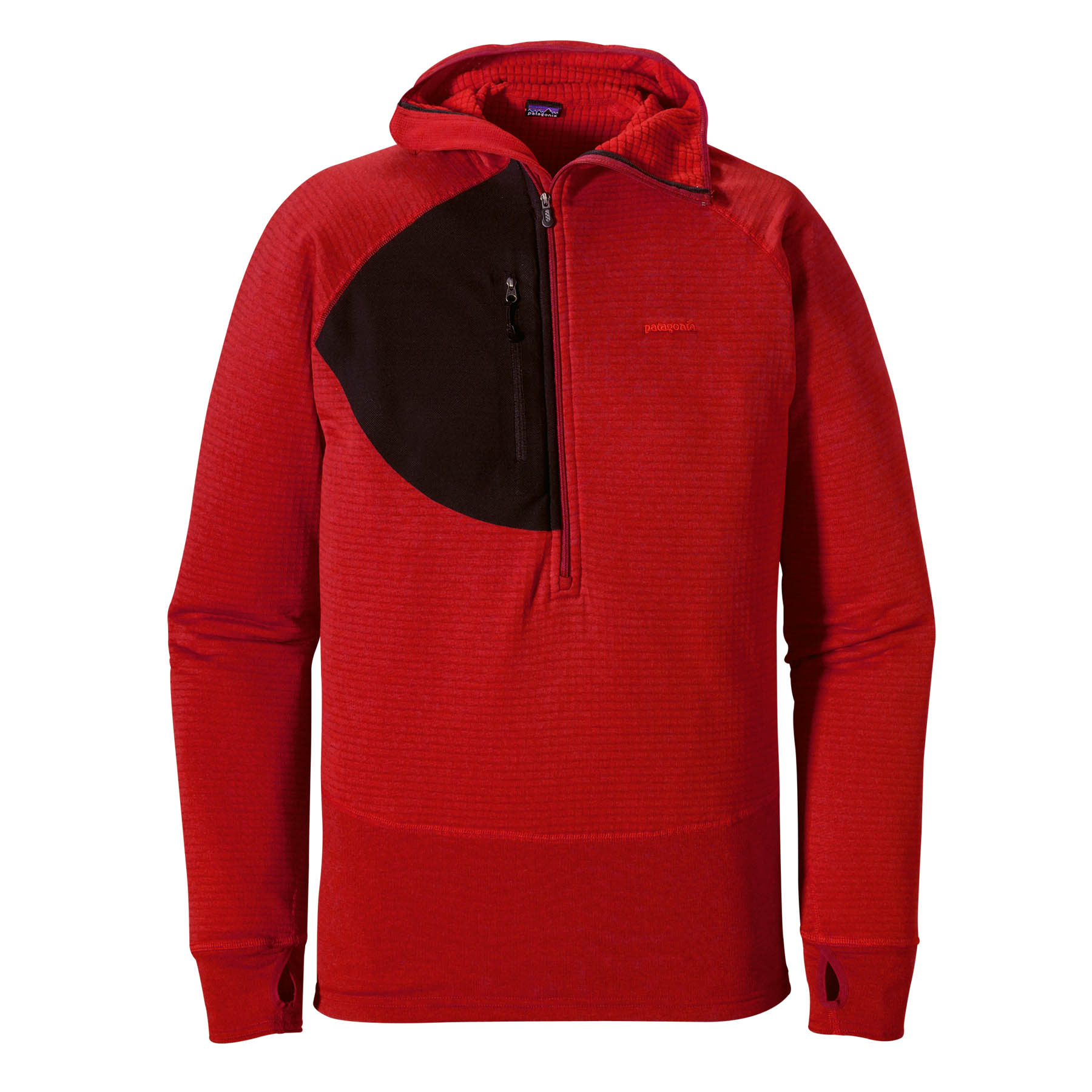
The minimalist R1® Hoody follows our guiding design principle: Perfection is achieved when there's nothing left to take away. Alpinists and backcountry skiers live in this finely tuned, versatile favorite that's made of Polartec® Power Dry® polyester with a high/low grid interior. The fabric provides enhanced breathability, superb compressibility and stretch, has a terrific feel, and remains durable and warm. Its design features the pared-down detailing that avid climbers and backcountry skiers need - from the deep-venting front zipper that's offset at the face, to wrist-warming thumb loops, to the snug-fitting balaclava-style hood. With raglan sleeves for pack-wearing comfort, an exterior chest pocket and low-grid stretch polyester at the cuffs and bottom hem for minimal bulk under a harness.

The first regulator garment that I bought was a R1 Flashpullover back in 2006, it’s a sort of cross between the R1 hoody and the pullover in the current line. It has the more sculpted and longer fit of the hoody and the lighter stretch fleece in the cuffs, round the lower torso and under the arms but lacks the thumb loops and hood. I don’t know the exact number but I wouldn’t be surprised if this top had seen more than 150 days use. It’s been used as a midlayer while skiing, a stretchy cragging top on cooler days, a super warm baselayer in really cold conditions and now my girlfriend occasional dons it as pyjames on cold nights! I’m a little disappointed that Patagonia has dropped this from their current line as I feel it’s a significant step up from the regular pullover because of the longer cut, and small features like the offset neck and zoned use of fabrics. I’m guessing their logic behind this is that the regular pullover, without those aforementioned features are cheaper to make and anybody who does desire them will buy the hoody and probably benefit from the hood and longer cut as well. In a perfect world I guess we’d have all three, but Patagonia can’t have an infinite range.

Cragging in Sqamish,BC in my Flash pullover.

After using and abusing the Flash for so long I decided that it was time to replace it with a hoody, and eventually about 18 months ago I managed to find the elusive item in Patagonia’s outlet shop in Salt Lake City, Utah. It soon became clear that this was indeed going to be an upgrade rather than a replacement for my old Flash pullover.

Let’s talk about the material first. It uses a high/low grid interior made of Polertec’s Power Dry supplemented my Capilene stretch panels on the waist to minimalize bulk under a harness and around the cuffs and thumb loops to have the same effect under gloves. Because of the grid design it is noticeably more breathable then other standard fleeces, it also means that it’s is comfortable to wear next to the skin in in moister conditions.

Sport climbing on a cool day in the Saas valley in Switzerland with the R1 Hoody.

The hood, there weren’t up until a few years ago a lot of hooded fleeces out on the market and Patagonia were ahead of their time with the original release of the R1 Hoody and when they brought it back I feel they were still ahead of the game as its only in the last few years that we’ve seen other companies start to copy the design with couple of examples being the Berghaus Smoulder Hoody and Rab’s Shadow Hoody. I also hear Mountain Hardwear has a similar piece in the pipeline which has been designed in conjunction with Ueli Steck. While the hood isn’t a replacement balaclava as it doesn’t cover the face entirely it gets pretty close to it. My routine at the bottom of a winter route is pull the hood up under my helmet as it keeps my head nice and warm and stops spindrift going down my back. The offset zipper means is comfortable to wear all the time as you have no zipper rubbing against your chin. The zipper itself its nice and deep, deeper than most pullover tops which allows for excellent venting and dumping of heat if it gets too hot.

Winter climbing on Aonach Mor with the Hoody as a midlayer.

This is a climbing garment so it is perhaps prudent to mention that the combination of the stretch properties of the fabric and superb cut mean that his garment doesn’t restrict movement at all. Mine is a snug size small and I still don’t feel restricted all, even when using it as a midlayer. It’s also comfortable to wear having flat lock seams which are cleverly positioned away from areas where they might rub or chafe. Predominantly this is a winter climbing top for me, check out my article here to see what I wear in conjunction with.

The workmanship, being Patagonia is second to none. This top has probably seen 50 days of use, having climbed 35 routes in the UK last winter, and seen two summers in the Alps and has little wear to show for it apart from a little balling of the fabric, and to be honest I expected this. My Flash pullover which is now 6-7 years old and has been my go to cragging to top for the last few is still wearable now despite the fabric being quite heavily balled and two small holes appearing in the chest – I’ve certainly had my money’s worth though.

Belaying on Tower Ridge, Ben Nevis with the hood up under a helmet.

Yes, £120 is a lot for a fleece. But you not just getting a fleece, your getting a super versatile piece of clothing that will probably last you for quite a long time. If you don’t have one, and you do any winter or alpine climbing I cans seriously recommend them and guarantee that you won’t be disappointed.

Sunday, 28 February 2010

Summer Alpine Clothing - Soft Shell Pants

After my return from Canada, and once I get my practical work done for my dissertation I'm planning on spending some time in the Alps with various people this summer, hopefully ticking some of Rebuffet's classic routes in the Mont Blanc massif. Joining me for the first period of the trip is my friend Lewis Abbott, we had a conversation recently and he asked what I thought regards soft shell pants for summer alpine climbing so I thought I'd spill some of my thoughts on the topic on here.

So whats the definition of soft shell, in my mind its something that is much more comfortable to wear than a full hardshell (Gore-tex, eVent etc.) due to better breathability and less restricted movement, the downside being that they don't offer the full weather protection of a proper shell.

The soft shell concept has been around for a lot longer than people think, perhaps not in its current guise of sexy stretchy fabrics that have been popular for the last five years, the original soft shell was the combination of pile and pertex by Buffalo in their smocks, and similar things from companies such as Montane and Mardale. Shortly after this shelled-micro-pile became very popular, with the most famous incarnation being Marmot's Driclime fabrics. These consist of a windproof and water resistance outer fabric with a high wicking linear hung inside and are in my opinon one of the best options for a soft shell options out there, Rab popularized this design even further with the introduction of their Vapourise line which works on the same concept.

Sporting a Montane Pile/Pertex Extreme Smock, where it belongs, in Scottish Winter.

If we step away from the above and look at the types of fabrics that most people at present would consider stereotypically 'soft-shell', soft to touch stretchy fabrics they can be roughly divided into two categories, those built with a membrane and those without. Membrance fabrics such as Windstopper, eVent softshell and other all other a lot of protection but often offer little advantage in breathability over a conventional waterproof. Fabrics without a membrane are usually a lot more breathable but don't offer the same level as protection.

So how does all this crap relate to what to wear on your legs in the Alps, wells lets look at what you want a pair of pants to do. Full on waterproof salopettes like we'd traditionally see being worn in the depths of scottish winter are overkill for the alps, you'll get far too hot so breathability is key. You want them to have a degree of weather resistance, to be windproof to a degree, be able to shrug of snow and maybe some light rain as when you've got your harness on (which 90% of the time you will have) you won't be putting your over-trousers on that easily. Alpine climbing is hard on your clothing, particularity on the knees and ankle cuffs so you want them to hard wearing, reinforcement in these areas is a good idea. Finally your going to be wearing these pants for climbing so you want them to have good movement, this can be through stretch or just pants that are cut really well.

So what are good options that are out there?

I personally prefer a softshell pant without a really heavy membrane, and am quite happy to sacrafice some of this protection for breathability. I own a pair of membrane pants, Mountain Equipment G2 Ultimate Mountain pant and they are good pants but I find there uses limited, and generally not suited to summer alpine climbing (I use mine for Scottish Winter and cascade ice climbing where the temperatures are cold and its often wet, many people don't realize it but the wind-stopper fabric by Gore is effectively waterproof).

The two pairs of softshell pants that I've owned that I've found have worked particularly well in the alpine arena are the well known Patagonia Guide Pant and the much more elusive Montura Vertigo Light Pant. The guide pant has been around for years, and theres been a few different incarnations but in general the design has stayed roughly the same. They use a stretch woven fabric which gives a good freedom of movement and is DWR treated, if you look after this, washing it and re-activating it regularly it will keep beading water and shrug off snow without a problem. One feature I liked in the pair that I owned, circa 2006/7, was the gathered ankles which had a nice burly piece of hard wearing material on the inside to protect them from errant crampon spikes or sharp ski edges, they also had a zip though which meant you could still get them over bigger boots, and another good feature were two webbing loops on either side which allowed you to fit a piece of elastic you put under you boot, reducing the need for gaiters. I found the pants very hard wearing, despite them actually not having the reinforcements I mentioned originally, they did a lot of miles of rock routes, scrambles and actual alpine stuff and if they still fitted me I's still be wearing them now. From a UK perspective they're actually pretty dam useful once you get back from your trip to the alps as due to the breathability, and weather resistance there the perfect pants the UK hills in spring and autumn, and for some aspects of winter.

Wearing the Guide Pants in the Jostedal, Norway.

So lets move on and talk about the second pair I mentioned, Montura Vertigo Light Pants. I'm guessing that a large proportion of the people reading this won't of heard of the brand Montura, and until a few years ago I hadn't either. Its an Italian company and from what I can see there are very few places outside of Italy that you can purchase their stuff, the shops of Cortina of full of it, and I think Cham3s in Chamonix, France stocks some. I picked mine up from Matterhorn Sports in Zermatt, Switzerland in 2008. Simply put, there amazing, the best alpine pant I could want. The cut of the pants is fantastic, its very tight and athletic so may not suit everyone, think technical ronhills and you won't be far off. The ankle cuffs and lower leg are particularly close fitting and form a nice seal at the top of your boots stopping snow from getting in, due to this theres no excess fabric flapping about to catch on your spikes either. The next box in my list of things an alpine pant should do is that there hard wearing, the seat, knees and inside legs are all made with a Kevlar weave material which is incredibly tough, I've worn mine on Skye, Scotland and for anybody thats climbed on the Gabbro there this is a definite testament to them. So this leaves us with breathability and weather resitance to deal with, and the designers of these pants tackled this really well. The front of the pants are constructed of a stretchy, fairly waterproof ripstop material whereas the backside is made of a simple stretch woven material that is much more breathable. Climbing pitches of ice, or steep snow sections its the front parts of your legs that are going to need the protection, these pants give that but allow you to dump heat out the back at the same time - its a great idea.

Vertigo Lights in action on the Nadlegrat Ridge, Valais Alps, Switzerland.

So that my two cents, there are a lot of other pants out there that I've not had personal experience with, when I wear out my current pair I'd be keen to try out Arcteryx's Gamma AR Pant, and Mountain Equipment's Liskamm Pant also looks like a good contender.